 23 Ekim 2026
- İstanbul16°C▼
- Ankara14°C





Airline Profitability Stabilizes with 3.9% Net Margin Expected in 2026
9 December 2025 (Geneva)

09 Aralık 2025 Salı 13:43
The International Air Transport Association (IATA) released its latest financial outlook for the global airline industry showing a stabilization of profitability even as supply chain issues persist. Highlights include:
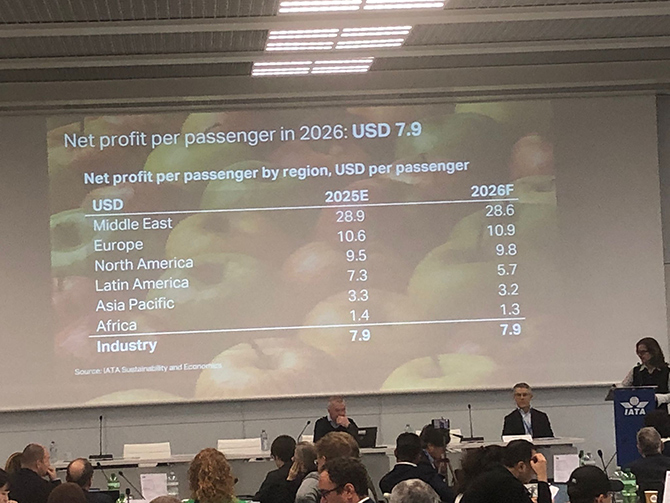
· Airlines are expected to achieve a combined total net profit of $41 billion in 2026 (up from $39.5 billion in 2025). While this would set a new record, the net profit margin is expected to be unchanged from 2025 at 3.9%. Net profit per passenger transported is expected to be $7.90 (below the 2023 high of $8.50, and unchanged from 2025).
· Operating profit in 2026 is expected to be $72.8 billion (up from $67.0 billion in 2025) for a net operating margin of 6.9% (improved on the 6.6% expected for 2025).
· Return on invested capital (ROIC) is expected to be 6.8% (unchanged from 2025). Despite deleveraging and improved operating profitability, ROIC is expected to remain below the weighted average cost of capital (WACC) estimated to be 8.2% in 2026.
· Total industry revenues are expected to reach $1.053 trillion in 2026 (up 4.5% on the $1.008 trillion expected revenues in 2025).
· Load factors are forecast to continue to set record highs with airlines expected to fill 83.8% of all seats over the year 2026.
· Passenger numbers are expected to reach 5.2 billion in 2026 (up 4.4% on 2025).
· Cargo volumes are expected to reach 71.6 million tonnes in 2026 (up 2.4% on 2025).
“Airlines are expected to generate a 3.9% net margin and a $41 billion profit in 2026. That’s extremely welcome news considering the headwinds that the industry faces—rising costs from bottlenecks in the aerospace supply chain, geopolitical conflict, sluggish global trade, and growing regulatory burdens among them. Airlines have successfully built shock-absorbing resilience into their businesses that is delivering stable profitability,” said Willie Walsh, IATA’s Director General.
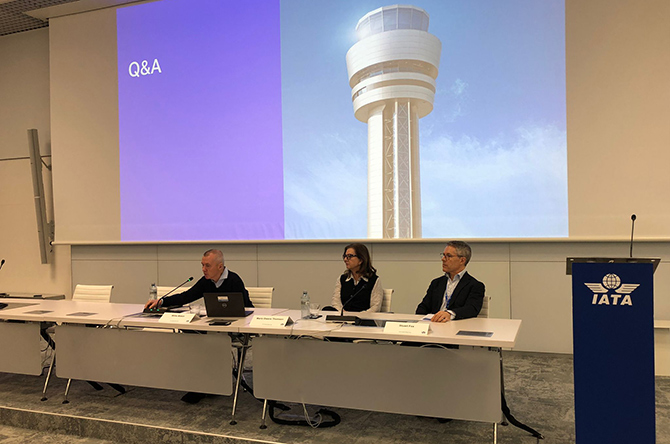
While strong performance of airlines in the face of a changing and challenging operating environment is impressive, the fact that the airline industry collectively does not generate earnings that cover its cost of capital remains an issue to be resolved. “Industry-level margins are still a pittance considering the value that airlines create by connecting people and economies. They stand at the core of a value chain that underpins nearly 4% of the global economy and supports 87 million jobs. Yet Apple will earn more selling an iPhone cover than the $7.90 airlines will make transporting the average passenger. And even within the air transport value chain, airline margins are totally out of balance, particularly when compared to margins of engine and avionics manufacturers and many of our service suppliers. Imagine the additional power that airlines could bring to economies if we could re-balance value chain profitability, reduce regulatory and tax burdens, and alleviate infrastructure inefficiencies,” said Walsh.
Air cargo’s performance is of particular interest as it has defied many predictions of gloom to hold its own amid rapidly changing trading conditions. “The resilience in air cargo has been particularly impressive. As trade flows adapt to a protectionist US tariff regime, air cargo has been the hero of global trade buoyed in part by robust e-commerce and semiconductor shipments to support the boom in AI investments. Notably, air cargo enabled front-loading to deliver products ahead of tariff deadlines, and it flexibly accommodated demand surges as tariffed goods normally destined for the US found new markets. The critical role of air cargo is front and center as the global economy adjusts to new realities,” said Walsh.
Outlook Drivers
Overall revenues are expected to grow by 4.5% to $1.053 trillion. This is expected to outpace operating expense growth of 4.2% to $981 billion, leading to a $1.5 billion improvement in industry-wide net profitability in 2026.
Macro-economic factors impacting airlines are mixed for 2026. On the positive side, GDP growth is expected to be largely stable at 3.1% and inflation is expected to ease slightly to 3.7%. World trade growth is, however, expected to be anemic at 0.5%.
Revenue
· Passenger ticket revenues are expected to reach $751 billion in 2026 (+4.8% on $716 billion in 2025). This growth will be primarily driven by a 4.9% expansion of industry-wide revenue passenger kilometers (RPK) expected in 2026. Yields are expected to remain relatively flat while the passenger load factor is expected to set a new record at 83.8% as new aircraft remain in short supply.
· Ancillary and other revenues are projected to rise by 5.5%, reaching $145 billion. Ancillary services now account for nearly 14% of total revenue, up from 12-13% pre-pandemic.
· Cargo revenue is forecast to reach $158 billion in 2026 (+2.1% on $155 billion in 2025). This moderate expansion is driven by continued growth in cargo, particularly in time-sensitive shipments and e-commerce volumes (+2.6% growth in cargo tonne kilometers or CTK in 2026, slowing from +3.1% growth in 2025). Coupling these factors with tightening capacity, cargo yields are expected to remain stable (-0.5% on 2025) and elevated (approximately 30% above pre-pandemic levels), despite a broader slowdown in global trade.
Costs
Overall, the 2026 cost outlook points to a more balanced environment. Fuel relief is offset by rising non-fuel pressures, but the broader slowdown in inflation is helping to stabilize the cost base.
· Fuel costs are expected to decline slightly to $252 billion in 2026 (-0.3% from $253 billion in 2025). The consensus forecast is for crude oil prices to decline to $62/barrel Brent (-11.0% on $70/barrel in 2025). Jet fuel prices are only expected to decline by 2.4% from $90/barrel in 2025 to $88/barrel in 2026 as the crack spread widens. The expiration of higher-cost hedges from 2025 should allow airlines to realize lower average prices that are closer to market levels. Fuel is set to account for 25.7% of total operating expenses, down from 26.8% in 2025.
Fuel efficiency gains are expected to be just 1.0% as supply chain issues continue to hamper fleet renewal and push the average aircraft age to over 15 years, the highest ever. Factoring in industry growth, fuel consumption is expected to increase to 106 billion gallons in 2026 (+2.7% on 103 billion gallons in 2025).
The cost of compliance with the Carbon Offsetting and Reduction Scheme for International Aviation (CORSIA) is expected to grow to $1.7 billion for 2026 (up from $1.3 billion for 2025).
The incremental cost of airline purchases of Sustainable Aviation Fuel (SAF) is expected to reach $4.5 billion in 2026, with the expectation of 2.4 million tonnes of SAF being available (0.8% of total fuel consumption).
· Non-fuel costs are forecast to be $729 billion (+5.8% on $689 billion in 2025). Labor costs are now the largest cost component (28%) as wage growth continues to outpace inflation amid very tight labor market conditions. Despite strong hiring, the airline industry has struggled to restore employment productivity to 2019 levels, as rapid workforce growth has outpaced gains in output per employee amid ongoing operational and training challenges.
Maintenance costs are climbing due to the aging fleet and supply chain disruptions that affect the availability of parts. Lease rates have reached record highs, pushing up ownership costs. Airport and en-route charges continue to rise as well.
· A weaker US dollar is expected to benefit non-USD-based airlines’ profitability and margins by reducing US dollar-denominated costs such as fuel, aircraft leases, and maintenance. IATA estimates that 55–60% of global airline costs are denominated in USD, compared to 50–55% on the revenue side. Based on this, a 1% weakening of the USD against global currencies may lift global airline profits by 1% and improve operating margins by around 0.05 ppt.
Risks, Constraints, and Opportunities
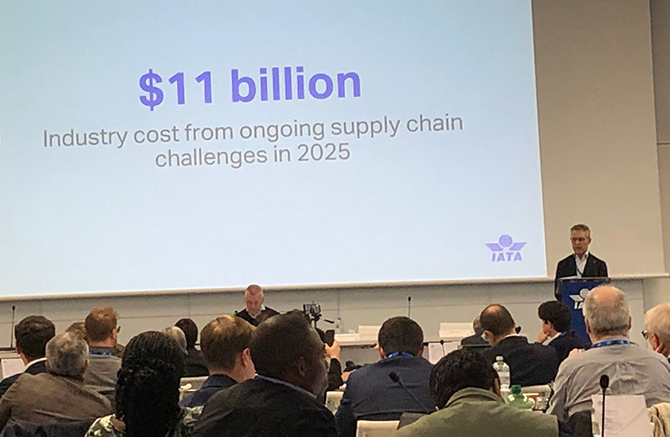
· Supply chain challenges continue to constrain airlines’ ability to meet consumer demand for air transport. While some improvements are expected in 2026, the backlog in aircraft orders is expected to continue to grow. High load factors and yield stability are partially attributable to supply chain issues. However, the growth-constraining impact of supply chain challenges remains a drag on airline profitability. Even as aircraft deliveries are projected to increase significantly in 2026, the pace of new orders is outstripping production, causing the backlog to reach new highs and signaling that supply constraints, and their financial impact, will persist well beyond the near term.
· The regulatory cost burden on airlines is significant. While significant deregulation is being pursued in the US, European regulators have yet to act on the recommendations of the Draghi report to make significant improvements in competitiveness by easing regulatory burdens. A case in point is the attempt to reform the European regulation on passenger rights (EU261), which has been watered down in ambition and convoluted with proposals to essentially make cabin baggage a passenger right irrespective of an airline’s business model or customer need.
· Infrastructure constraints are not expected to ease significantly in 2026. However, US plans to renew its air traffic management system in the coming years would be a major improvement. While regulators have reaffirmed International Civil Aviation Organization principles for infrastructure charges, most have failed to use the principles to realize cost efficiencies. A case in point is London’s Heathrow Airport where the potential cost of expansion plans could render the airport uncompetitive without significant reforms.
· Conflict continues to hamper airlines with significant costs. Airspace closures, GNSS interference, and re-routing for both political and safety reasons are constraining operations and reducing efficiencies.
Regional Roundup
Africa
2025 Net Profit (e) (net margin) Per passenger | 2026 Net Profit (f) (net margin) Per passenger | 2026 Demand (RPK) | 2026 Capacity (ASK) |
$0.2 b (1.1%) $1.40 | $0.2 b (1.0 %) $1.30 | 6.0% | 5.7% |
Low GDP per capita across much of the continent limits discretionary spending, making air travel highly price sensitive and restricting its growth potential. Demand is further constrained by visa restrictions, restrictive bilateral agreements, and high passenger charges. Moreover, African carriers face the highest unit costs globally, with average cost per ATK near 140 US cents, almost double the industry average. Among the many factors contributing to the high cost of operations in Africa are high fuel costs, fragmented markets, older fleets, and average corporate tax rates of 28% (the highest among all regions).
Until these constraints ease, Africa’s airline industry will operate with thin margins and limited resilience, even as traffic expands faster than the global average.
Asia Pacific
2025 Net Profit (e) (net margin) Per passenger | 2026 Net Profit (f) (net margin) Per passenger | 2026 Demand (RPK) | 2026 Capacity (ASK) |
$6.2 b (2.3%) $3.30 | $6.6 b (2.3 %) $3.20 | 7.3% | 7.1% |
Passenger demand remains robust, with China and India leading regional expansion, driven by rising tourism activity and the growing middle classes. Easing visa requirements for Chinese group tours to South Korea and for visitors to China are expected to stimulate short-term inbound demand, particularly during peak holiday periods.
Overcapacity remains a challenge amid a slower recovery in international traffic putting pressure on yields. Deflationary pressures are also driving yields lower in China. Nevertheless, Asia Pacific remains the largest contributor to global traffic growth, with load factors projected to reach 84.4% in 2026, an all-time high for the region.
While Chinese exports to the US have declined, substitution effects have helped offset the impact of trade tensions, as Chinese goods have found alternative markets.
Europe
2025 Net Profit (e) (net margin) Per passenger | 2026 Net Profit (f) (net margin) Per passenger | 2026 Demand (RPK) | 2026 Capacity (ASK) |
$13.2 b (4.8%) $10.60 | $14.0 b (4.9 %) $10.90 | 3.8% | 3.8% |
Europe is projected to deliver the strongest financial performance in absolute terms among all regions. European airlines show disciplined capacity management and strong load factors. Low-cost carriers are performing particularly well, expanding at double-digit rates and outperforming full-service carriers on net profit margin, fueled by strong intra-European traffic and leisure market. Traffic growth is moderating as the market matures and amid tepid economic conditions in the Euro zone where GDP growth lags the global average.
On the cost side, the strength of the Euro has provided a partial offset to inflationary pressures, particularly in fuel and leasing expenses, helping carriers maintain margins despite volatility in input costs.
The regulatory cost burden is increasing with the ReFuelEU initiative requiring a 2% SAF blend at EU airports from 2025. This coincides with mounting operational headwinds: labor unrest, drone disruptions, and persistent air traffic control bottlenecks.
Latin America
2025 Net Profit (e) (net margin) Per passenger | 2026 Net Profit (f) (net margin) Per passenger | 2026 Demand (RPK) | 2026 Capacity (ASK) |
$2.5 b (5.2%) $7.30 | $2.0 b (3.8 %) $5.70 | 6.6% | 6.5% |
Traffic growth remains robust driven by economic stability and enhanced intra-regional connectivity. Demand between the Americas has softened, though this has been offset by increased regional flows and a solid transatlantic performance, highlighting the adaptability of carriers in the face of shifting travel patterns.
Operating profitability is anticipated to rebound again in 2026, benefiting from the gradual strengthening of the region’s fundamentals. However, currency fluctuations remain a critical headwind. Although 2025 saw temporary relief with local currencies appreciating, volatility is expected to continue to challenge cost management and profitability.
With several major carriers in the region realizing the benefits of Chapter 11 restructuring, the region’s environment has shifted from crisis-driven survival to cautious, efficiency-focused rebuilding.
Middle East
2025 Net Profit (e) (net margin) Per passenger | 2026 Net Profit (f) (net margin) Per passenger | 2026 Demand (RPK) | 2026 Capacity (ASK) |
$6.6 b (9.3%) $28.90 | $6.8 b (9.3 %) $28.60 | 6.1% | 5.4% |
The Middle East is the strongest region in terms of net profit margin and profit per passenger. This performance attests to the difference a positive regulatory operating environment can make, and to the region’s strategic position as a global connecting hub.
Passenger demand continues to be robust, driven by long-haul traffic and the expansion of hub carriers. Governments and airlines are doubling down on infrastructure investments to secure long-term growth. While geopolitical tensions remain a feature of the regional landscape, they are not expected to negatively impact growth, particularly as efforts to secure lasting peace continue.
Middle Eastern carriers are mitigating aircraft delivery delays through retrofit programs and fleet life extensions, though capacity growth will remain constrained in the near term.
North America
2025 Net Profit (e) (net margin) Per passenger | 2026 Net Profit (f) (net margin) Per passenger | 2026 Demand (RPK) | 2026 Capacity (ASK) |
$10.8 b (3.3%) $9.50 | $11.3 b (3.4 %) $9.80 | 1.5% | 1.0% |
North American profitability remains stable, but the region ceded its most profitable ranking to Europe in 2025.
The United States suffered stagnating overall growth and a domestic market contraction in the face of policy uncertainty around tariffs, tighter immigration enforcement dampening both inbound and domestic travel, and a lengthy government shutdown. Capacity constraints, pilot shortages, engine reliability issues, and rising labor costs continue to restrict expansion. Despite these hurdles, airlines managed to protect margins in 2025, supported by stable yields and lower fuel prices. Performance, however, varies by business model. Low-cost carriers are under pressure, heavily exposed to the shrinking US domestic segment, growing passenger preferences for premium services, and facing the disadvantages of single-type fleets amid supply chain disruptions.
Looking ahead, 2026 is expected to see some easing of these challenges and the opportunity for a gradual increase in demand.
Travelers’ Viewpoint
Air travel continues to deliver exceptional value to consumers. Average real return air fares in 2025 US dollars were 34.7% cheaper compared to 2015. And passengers are expected to benefit from efficiency gains and competitive forces that will likely see 2026 average return air fares at 36.8% below 2015 level.
An IATA public opinion poll conducted in October-November 2025 (14 countries, 6,500 respondents who have taken at least one trip in the last year) revealed that 97% of travelers expressed satisfaction with their last travel experience. Moreover, 88% agreed that air travel makes their lives better, 78% agreed that air travel is good value for money, and 87% said they cared about their ability to fly in future.
Passengers are counting on a safe, sustainable, efficient, and profitable airline industry. The IATA public opinion polling demonstrated the important role that travelers see the airline industry playing:
· 90% agreed that air connectivity is critical to the economy
· 88% said that air travel has a positive impact on societies, and
· 82% said that the global air transport network is a key contributor to the UN Sustainable Development Goals (SDGs)
· 83% care about the success of the aviation industry
The air transport industry is committed to its goal of achieving net zero CO2 emissions by 2050. Travelers are expressing high levels of confidence in this endeavor with 79% agreeing that the industry is demonstrating commitment to work together to achieve its ambitious goal, 77% agreeing that aviation leaders are taking the climate challenge seriously.
![UND Başkanı Şerafettin Aras: "Sektörümüzün Vizyonunu ve Başarılarını Atlas Lojistik Ödülleri ile Görünür Kılalım”]() UND Başkanı Şerafettin Aras: "Sektörümüzün Vizyonunu ve Başarılarını Atlas Lojistik Ödülleri ile Görünür Kılalım”Lojistik sektörünün en prestijli organizasyonlarından Atlas Lojistik Ödülleri 2026 için geri sayım sürerken, Uluslararası Nakliyeciler Derneği (UND) Başkanı Şerafettin Aras, sektöre çağrıda bulundu.23 Ekim 2026 Cuma 15:35Lojistik
UND Başkanı Şerafettin Aras: "Sektörümüzün Vizyonunu ve Başarılarını Atlas Lojistik Ödülleri ile Görünür Kılalım”Lojistik sektörünün en prestijli organizasyonlarından Atlas Lojistik Ödülleri 2026 için geri sayım sürerken, Uluslararası Nakliyeciler Derneği (UND) Başkanı Şerafettin Aras, sektöre çağrıda bulundu.23 Ekim 2026 Cuma 15:35Lojistik![Hareket’in Güvenlik Başarısına Küresel Ödül]() Hareket’in Güvenlik Başarısına Küresel ÖdülHareket, geliştirdiği H-CORE Güvenlik Performansı Ekosistemi ve bu ekosistemin alt projesi Q.U.R.U. AI Safety Assistant ile Heavy Lift Awards 2026’da “Güvenlik ve Eğitim” (Safety and Training) kategorisinde ödülün sahibi oldu.22 Ekim 2026 Perşembe 18:36Lojistik
Hareket’in Güvenlik Başarısına Küresel ÖdülHareket, geliştirdiği H-CORE Güvenlik Performansı Ekosistemi ve bu ekosistemin alt projesi Q.U.R.U. AI Safety Assistant ile Heavy Lift Awards 2026’da “Güvenlik ve Eğitim” (Safety and Training) kategorisinde ödülün sahibi oldu.22 Ekim 2026 Perşembe 18:36Lojistik![Aksaray Kamyon Fabrikası 40 Yılda 415 Bin Kamyon Üretti]() Aksaray Kamyon Fabrikası 40 Yılda 415 Bin Kamyon ÜrettiMercedes-Benz Türk Aksaray Kamyon Fabrikası, 40 yıllık üretim geçmişinde 415 bini aşkın kamyon üretti, 135 binden fazla kamyonu 70’i aşkın ülkeye ihraç etti.22 Ekim 2026 Perşembe 18:04Ticari Araçlar
Aksaray Kamyon Fabrikası 40 Yılda 415 Bin Kamyon ÜrettiMercedes-Benz Türk Aksaray Kamyon Fabrikası, 40 yıllık üretim geçmişinde 415 bini aşkın kamyon üretti, 135 binden fazla kamyonu 70’i aşkın ülkeye ihraç etti.22 Ekim 2026 Perşembe 18:04Ticari Araçlar![TIR Kuyrukları ve Vize Engeli Lojistik Sektörünü Zorluyor]() TIR Kuyrukları ve Vize Engeli Lojistik Sektörünü ZorluyorUND Başkanı Şerafettin Aras, Avrupa sınırlarında günler süren bekleyişlerin ve Schengen’in 90/180 gün kuralının taşımacılığı olumsuz etkilediğini belirterek kalıcı çözüm çağrısında bulundu.22 Ekim 2026 Perşembe 15:52Lojistik
TIR Kuyrukları ve Vize Engeli Lojistik Sektörünü ZorluyorUND Başkanı Şerafettin Aras, Avrupa sınırlarında günler süren bekleyişlerin ve Schengen’in 90/180 gün kuralının taşımacılığı olumsuz etkilediğini belirterek kalıcı çözüm çağrısında bulundu.22 Ekim 2026 Perşembe 15:52Lojistik![Renault Trucks'ın Yedek Parça Dağıtım Altyapısı, Volvo Group'un Yeni Yatırımı ile Daha da Güçleniyor]() Renault Trucks'ın Yedek Parça Dağıtım Altyapısı, Volvo Group'un Yeni Yatırımı ile Daha da GüçleniyorVolvo Group, Kocaeli Çayırova'da yaklaşık 2,8 milyon Avro yatırımla yeni Bölgesel Dağıtım Merkezi'ni hizmete açtı.21 Ekim 2026 Çarşamba 18:25Ticari Araçlar
Renault Trucks'ın Yedek Parça Dağıtım Altyapısı, Volvo Group'un Yeni Yatırımı ile Daha da GüçleniyorVolvo Group, Kocaeli Çayırova'da yaklaşık 2,8 milyon Avro yatırımla yeni Bölgesel Dağıtım Merkezi'ni hizmete açtı.21 Ekim 2026 Çarşamba 18:25Ticari Araçlar![Kankar’dan 9 Adetlik Tırsan Yatırımı]() Kankar’dan 9 Adetlik Tırsan YatırımıTırsan, Kankar Uluslararası Nakliyat’a 9 adet Yeni Nesil Tenteli Perdeli Multi-Ride teslim etti. Bu yatırımla birlikte Kankar Uluslararası Nakliyat’ın Avrupa operasyonlarındaki Tırsan sayısı 26’ya ulaştı.21 Ekim 2026 Çarşamba 17:11Ticari Araçlar
Kankar’dan 9 Adetlik Tırsan YatırımıTırsan, Kankar Uluslararası Nakliyat’a 9 adet Yeni Nesil Tenteli Perdeli Multi-Ride teslim etti. Bu yatırımla birlikte Kankar Uluslararası Nakliyat’ın Avrupa operasyonlarındaki Tırsan sayısı 26’ya ulaştı.21 Ekim 2026 Çarşamba 17:11Ticari Araçlar![Oregon Yeni Teknoloji Üssü ile Hizmet Standartlarını Zirveye Taşıyor]() Oregon Yeni Teknoloji Üssü ile Hizmet Standartlarını Zirveye TaşıyorOregon Teknoloji, İstanbul Pendik’te 10 milyon dolarlık yatırımla hayata geçirdiği yeni teknoloji üssüyle operasyonel kapasitesini artırmayı ve uluslararası büyümesini hızlandırmayı hedefliyor.21 Ekim 2026 Çarşamba 14:24Lojistik
Oregon Yeni Teknoloji Üssü ile Hizmet Standartlarını Zirveye TaşıyorOregon Teknoloji, İstanbul Pendik’te 10 milyon dolarlık yatırımla hayata geçirdiği yeni teknoloji üssüyle operasyonel kapasitesini artırmayı ve uluslararası büyümesini hızlandırmayı hedefliyor.21 Ekim 2026 Çarşamba 14:24Lojistik![Mercedes-Benz Türk İş Ortaklarıyla 2027 Hedeflerine Odaklandı]() Mercedes-Benz Türk İş Ortaklarıyla 2027 Hedeflerine OdaklandıMercedes-Benz Türk, 12-14 Ekim 2026 tarihleri arasında Kıbrıs’ta Kamyon Pazarlama & Satış ve TruckStore iş ortaklarıyla bir araya geldi.20 Ekim 2026 Salı 18:43Ticari Araçlar
Mercedes-Benz Türk İş Ortaklarıyla 2027 Hedeflerine OdaklandıMercedes-Benz Türk, 12-14 Ekim 2026 tarihleri arasında Kıbrıs’ta Kamyon Pazarlama & Satış ve TruckStore iş ortaklarıyla bir araya geldi.20 Ekim 2026 Salı 18:43Ticari Araçlar![Renault Trucks FEST 3’üncü Yılında Genişleyen Ürün Gamıyla 10 Şehri Dolaşıyor]() Renault Trucks FEST 3’üncü Yılında Genişleyen Ürün Gamıyla 10 Şehri DolaşıyorBu yıl üçüncüsü düzenlenen Renault Trucks FEST, İstanbul, İzmit, İzmir, Antalya ve Konya duraklarını tamamlayarak Türkiye turuna devam ediyor.16 Ekim 2026 Cuma 16:10Ticari Araçlar
Renault Trucks FEST 3’üncü Yılında Genişleyen Ürün Gamıyla 10 Şehri DolaşıyorBu yıl üçüncüsü düzenlenen Renault Trucks FEST, İstanbul, İzmit, İzmir, Antalya ve Konya duraklarını tamamlayarak Türkiye turuna devam ediyor.16 Ekim 2026 Cuma 16:10Ticari Araçlar![Airbus’tan Yolcu Uçağı Pazarı İçin 20 Yıllık Öngörü, Premium Sınıflara Talep Artacak, Yeni Nesil Uçakların Payı %82’ye Çıkacak]() Airbus’tan Yolcu Uçağı Pazarı İçin 20 Yıllık Öngörü, Premium Sınıflara Talep Artacak, Yeni Nesil Uçakların Payı %82’ye ÇıkacakAirbus havacılıkta yolcu pazarına ilişkin gelecek 20 yılın öngörülerini açıklarken, havayolu ile seyahate talebin artacağını ve bu durumun gerek uçak tasarımlarında gerekse yolcu profilinde önemli değişiklikleri beraberinde getireceğini duyurdu.16 Ekim 2026 Cuma 15:09Havayolu
Airbus’tan Yolcu Uçağı Pazarı İçin 20 Yıllık Öngörü, Premium Sınıflara Talep Artacak, Yeni Nesil Uçakların Payı %82’ye ÇıkacakAirbus havacılıkta yolcu pazarına ilişkin gelecek 20 yılın öngörülerini açıklarken, havayolu ile seyahate talebin artacağını ve bu durumun gerek uçak tasarımlarında gerekse yolcu profilinde önemli değişiklikleri beraberinde getireceğini duyurdu.16 Ekim 2026 Cuma 15:09Havayolu














- Geri
- Ana Sayfa
- Normal Görünüm
- © 2026 Kargo Haber
Türkçe karakter kullanılmayan ve büyük harflerle yazılmış yorumlar onaylanmamaktadır.